Firearms Offenses Defense
Gun charges turn on details most people never knew were crimes.
California has some of the strictest gun laws in the country, and many firearm charges are brought against people who did not know they were breaking the law — a loaded gun in the glove box, a magazine bought legally in another state, a prior conviction that quietly took away the right to own one. David defends firearm cases in Fresno and the Central Valley, in state and federal court.
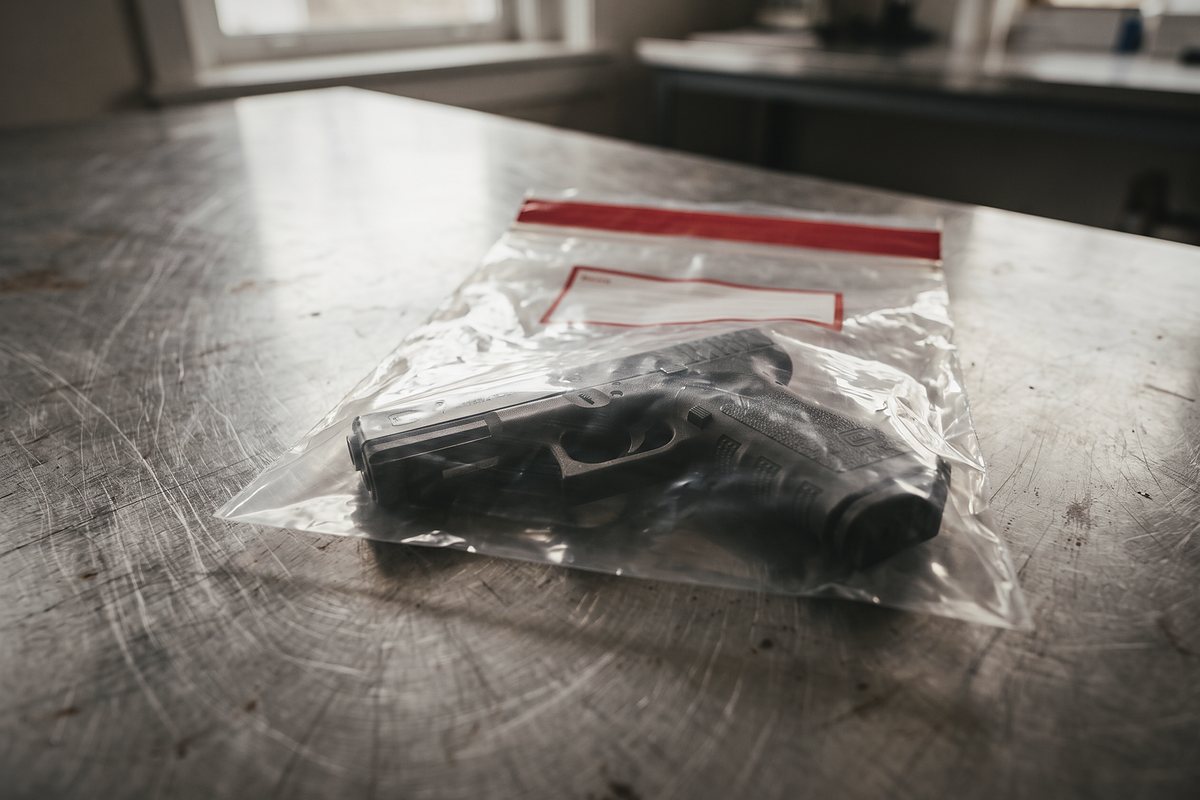
What the Law Says
Who had the gun, where it was, and what the person’s record shows.
Some firearm charges depend on the person. Possession of a firearm by a prohibited person (Penal Code § 29800) is a felony for anyone with a prior felony conviction, and Penal Code § 29805 makes it a crime for ten years after certain misdemeanors, including domestic battery and criminal threats. A person subject to a domestic violence restraining order cannot possess a firearm at all (Penal Code § 29825). Federal law (18 U.S.C. § 922(g)) covers much of the same ground with longer sentences.
Other charges depend on the gun or how it was carried. Carrying a concealed firearm (Penal Code § 25400) and carrying a loaded firearm in public (Penal Code § 25850) are misdemeanors for most people but felonies when the gun is stolen, the person is in a gang, or the person has a prior conviction. Assault weapons (Penal Code § 30605), large-capacity magazines (Penal Code § 32310) and unserialized “ghost guns” (Penal Code § 29180) each carry their own penalties. Negligent discharge (Penal Code § 246.3) and shooting at an inhabited dwelling or vehicle (Penal Code § 246) are serious felonies, the latter a strike.
The biggest effect of a firearm is often on another charge. A gun-use allegation under Penal Code § 12022.5 adds 3, 4 or 10 years to a felony, and § 12022.53 adds 10 years, 20 years or 25 years to life to specified serious felonies. Courts now have discretion to strike those enhancements, and whether they do is argued at sentencing.
How the Office Defends These Cases
Most gun cases begin with a search, and that is where the defense begins too.
The stop and the search
Guns are usually found during a traffic stop, a probation search or a search of a home. If the stop or the search was unlawful, the gun can be kept out of evidence under Penal Code § 1538.5, and without it there is usually no case.
Possession
When a gun is found in a car or a house with several people, the prosecution has to prove the client knew it was there and had control over it. That proof is tested, not assumed.
The prior conviction
Prohibited-person charges rest on a prior conviction or order. The defense checks whether it actually qualifies, whether it has been reduced or dismissed, and whether the person was ever told of the prohibition.
Constitutional challenges
Firearm law has been changing rapidly in the courts since 2022. Where a charge rests on a gun restriction that courts are currently questioning under the Second Amendment, that argument is raised and kept alive for appeal.
Enhancements
Gun enhancements can add more time than the underlying crime. The court now has the power to strike them, and the defense builds the record for that request from the beginning.
Restoring rights
Where the case allows, resolutions that keep or restore the client’s right to own a firearm are pursued, and clients are advised on reductions and relief that can lift a prohibition later.